

By Mercy Onyenweli
Despite the daunting challenges confronting the public transportation sector, the Edo City Transport Service (ECTS) has continued to record significant transformation under the leadership of its Managing Director, Barrister Festus Ehimuan.
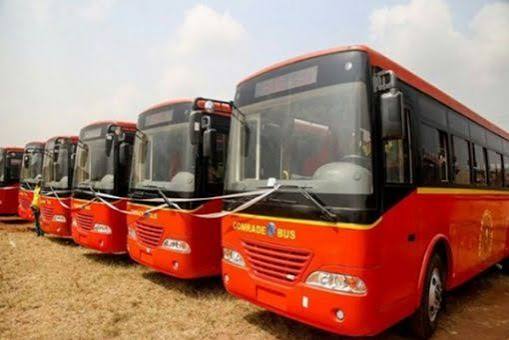
Established in 1993 under the Edo Municipal Transport Service Law to provide subsidised transportation for residents of Edo State, the government-owned transport company was later renamed Edo City Transport Service (ECTS) during the administration of Chief Lucky Igbinedion.
Over the years, ECTS has had several Managing Directors, each confronted with peculiar operational and financial challenges. However, the emergence of Barr. Festus Ehimuan as Managing Director under the administration of Governor Monday Okpebholo has brought a renewed focus on operational efficiency, fleet expansion, staff welfare and improved service delivery.
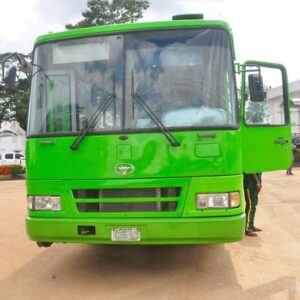
When Ehimuan assumed office, the transport company was grappling with a depleted fleet and serious maintenance challenges. A major problem was the Daewoo buses acquired by the previous administration, whose spare parts were reportedly difficult to obtain in Nigeria, making regular maintenance and repairs increasingly challenging.
Rather than allow the situation to cripple the agency, Ehimuan embarked on an aggressive refurbishment programme. Within a short period, 35 Daewoo buses were refurbished, increasing the number of operational buses on the roads from just 12 to 47.
This intervention not only restored vehicles that had been grounded but also significantly improved the capacity of ECTS to serve commuters across Benin City and its environs.
Determined to take the transformation beyond the rehabilitation of existing vehicles, Ehimuan explored alternative financing opportunities to expand the agency’s fleet.
Through a loan facility of ₦294,226,069 from Keystone Bank, the management procured Sienna buses to strengthen the company’s revenue-generating capacity.
The buses operate on routes outside Edo State and generate additional revenue for the agency, a strategy that has enabled ECTS management to meet its repayment obligations on the bank facility.
The initiative demonstrates an effort to make the government-owned transport company more commercially sustainable while retaining its primary responsibility of providing affordable transportation to Edo residents.
One of the major innovations introduced under the current management is the procurement of an injector servicing and repair machine for the ECTS workshoThe equipment is expected to improve the efficiency of the agency’s maintenance operations, reduce dependence on external mechanics and help minimise the time buses spend off the road.
Similarly, the management overhauled eight broken-down Toyota Hiace buses, bringing the number of operational Hiace buses to 18 for intercity routesBeyond buses and infrastructure, the Ehimuan-led management has also focused on addressing longstanding staff-related issues.
The promotion of 64 employees, whose promotions had reportedly been outstanding for more than five years, was implementedIn another significant move, 239 contract staff were converted to permanent employment, providing greater job security and improving the morale of workers who had spent years serving the organisation under contractual arrangements.
The loading bay at the company’s head office at Ramat Park was renovated, including the creation of a VIP waiting area.At the King Square Terminal, canopies and seating areas were constructed to provide passengers with a more comfortable environment while waiting to board buses.the establishment of an ECTS outstation office in Ekpoma has also expanded the agency’s operational reach and is expected to enhance service delivery to commuters within and around the university town.
In another effort to diversify the agency’s revenue base, the management launched the ECTS Courier Service and procured motorcycles to support efficient courier operations.The initiative represents another attempt to maximise the company’s existing infrastructure and logistics capacity while creating additional revenue streams for the government-owned enterprise.
Perhaps one of the most notable aspects of ECTS operations is the company’s continued commitment to affordable transportation despite the rising cost of diesel, which remains a major expenditure for operators of diesel-powered buses. ECTS buses continue to transport passengers within the Benin City metropolis at fares ranging from ₦200 to ₦300, depending on the distance.
For thousands of commuters who depend on public transportation daily, the affordability of ECTS services provides a significant relief at a time when transportation costs continue to put pressure on household incomes.
While the management has recorded several interventions in the rehabilitation and expansion of the company’s existing fleet, expectations are also high over the Edo State Government’s planned deployment of 50 LNG-powered buses to ECTS.Although the buses are yet to be delivered to the agency, their anticipated arrival has generated optimism within the transport sector.
The introduction of LNG-powered buses could significantly reduce the company’s dependence on diesel, lower operational costs and increase the number of buses available for commuters.For ECTS, the arrival of the new buses could therefore mark another major milestone in the ongoing transformation of the government-owned transport service.
Within two years, the Ehimuan-led management has attempted to address several longstanding challenges confronting ECTS—from fleet rehabilitation and expansion to staff welfare, infrastructure development, maintenance capacity and revenue diversification.
The transformation has taken place against the backdrop of rising operational costs and the difficult economics of running a government-owned transport service.
As ECTS awaits the arrival of the 50 LNG buses, there is growing expectation that the combination of the refurbished fleet, newly acquired vehicles, improved maintenance capacity and cleaner energy-powered buses will further reposition the company.
For a transport system established more than three decades ago to provide affordable mobility for Edo residents, the ongoing changes under Barr. Festus Ehimuan could signal the beginning of a new chapter—one in which efficiency, affordability, sustainability and improved passenger experience become the defining features of Edo City Transport Service.