

By Mercy Akuba
Seven months after the Edo State Government banned the activities of major transport unions, including the National Union of Road Transport Workers (NURTW), the Road Transport Employers Association of Nigeria (RTEAN), and Association of Nigerian New Workers in Transport, extortion, intimidation, and illegal revenue collection targeting commercial drivers remain widespread across the state.
The ban, announced by Governor Monday Okpebholo, followed sustained public outcry over alleged harassment, coercion, and the imposition of multiple informal levies by union operatives at motor parks and along major transport routes.
The State government said the move was aimed at restoring order, eliminating exploitation, and improving internally generated revenue through a more transparent system.
To enforce compliance, a taskforce was set up with a mandated to regulate transport operations, dismantle illegal checkpoints, and prosecute offenders.
However, findings from transport operators and independent observers suggest enforcement has been inconsistent, with illegal collections persisting in many parts of the state.
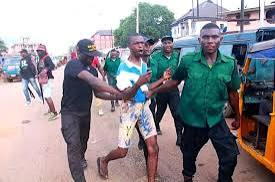
Commercial drivers report that certain individuals—often operating without official identification—continue to demand daily payments.
These collections are typically made in cash, outside any government-approved framework, and are allegedly diverted into private hands. In some cases, drivers say the amounts demanded vary arbitrarily, reinforcing concerns about systemic abuse and lack of accountability.
Transport sector analysts note that the persistence of these practices reflects deeper structural challenges.
Across Nigeria, unions such as the NURTW and RTEAN have historically functioned not only as labour organizations but also as de facto regulators of motor park activities, fare coordination, and route management.
Their sudden removal, without a fully operational replacement framework, appears to have created a regulatory vacuum now exploited by informal actors.
Many drivers admit they continue to comply with the demands out of fear of harassment, physical intimidation, or disruption to their daily operations.
Stakeholders argue that this compliance has inadvertently sustained the cycle of illegal collections despite the government’s directive.
Civil society groups and transport stakeholders have questioned whether the ban alone is sufficient to achieve lasting reform.
They advocate a more comprehensive and institutional approach that addresses both enforcement gaps and governance deficits within the sector.
Key recommendations from Stakeholders include the introduction of a centralized, technology-driven revenue collection system to reduce human contact and leakages; proper registration and biometric identification of commercial drivers and operators; and the establishment of clearly defined operational guidelines for transport activities across the state.
There are also calls for structured engagement with recognized union leadership under a reformed legal framework, rather than outright exclusion.
Incorporating unions into a regulated system could enhance compliance, improve intelligence gathering, and reduce the influence of unregistered actors.
Security agencies, including the Nigeria Police Force should intensify patrols and enforce laws against extortion and unlawful toll collection.
Observers also stressed the need for a whistleblower mechanism that protects drivers willing to report abuses.
Policy experts further recommend that lessons should be drawn from other states where transport reforms have combined regulation, digital payment systems, and stakeholder engagement to reduce leakages and improve efficiency.
As Edo State government continues its reform efforts, the persistence of illegal levies underscores the complexity of dismantling entrenched informal systems.
Without sustained enforcement, institutional restructuring, and stakeholder buy-in,
analysts warn that the objectives of the ban—curbing thuggery and extortion, improving transparency, and restoring order—may remain elusive.
For now, the state government should expedite action to structure the transport sector for effective and durable solution.