

By Our Reporter
Ebu, a once-thriving agrarian community in Oshimili North Local Government Area of Delta State, is gradually fading into obscurity as decades of neglect continue to cripple its growth and development. Known in the past for its rich agricultural activities and vibrant rural economy, Ebu has sadly transformed into what many residents now describe as a ghost town. The absence of basic social amenities, poor infrastructure, and prolonged government neglect have forced many indigenes and residents to abandon their ancestral homes in search of better living conditions in urban centres.
Today, many houses in the community stand deserted, while farmlands that once sustained families and contributed to the local economy remain largely uncultivated due to the harsh realities facing the people.
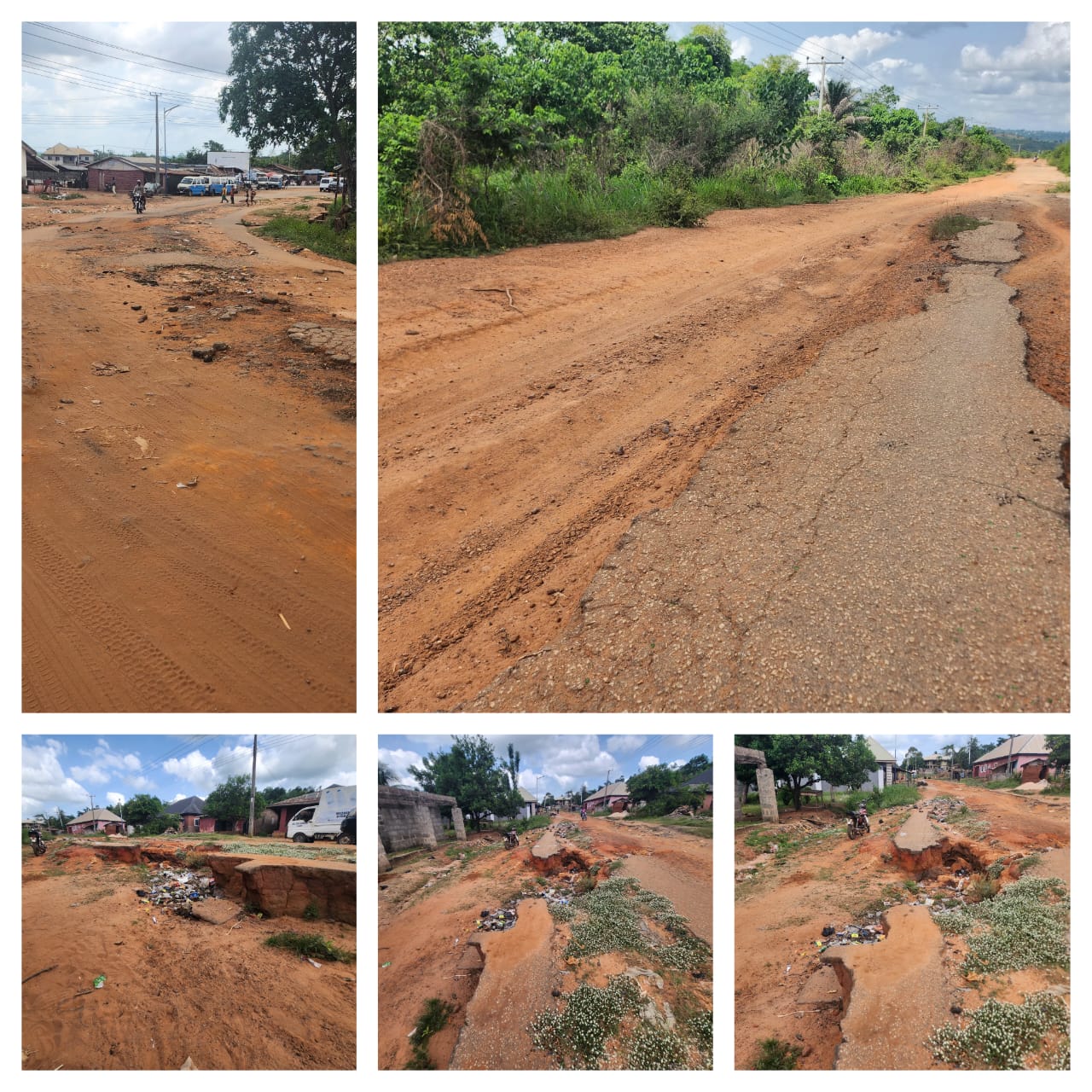
At the heart of the community’s challenges is the deplorable condition of the Ebu–Ezi–Ukala Road, the only major access route connecting Ebu to neighbouring communities and economic hubs. The road, which should serve as a gateway for commerce, transportation, and social interaction, has been cut off and abandoned for decades.
Residents lament that during the rainy season, the road becomes virtually impassable, making movement extremely difficult and worsening the community’s isolation. Farmers are unable to transport their produce to markets, while access to healthcare, education, and other essential services remains a major challenge.
Community leaders and concerned citizens have repeatedly appealed to successive administrations to intervene, but little has changed over the years. They argue that the prolonged neglect has left Ebu completely disconnected from the developmental strides witnessed in many other parts of Delta State.
With the current rainy season further exposing the community’s vulnerability, residents are once again calling on the Delta State Government, under the leadership of Governor Sheriff Oborevwori, to urgently come to their aid.
According to them, the reconstruction of the Ebu–Ezi–Ukala Road and the provision of basic social amenities would not only restore economic activities but also encourage displaced indigenes to return home and contribute to the community’s development. The people insist that Ebu deserves a place on the state’s development map and should not be left behind in the ongoing drive for inclusive growth and infrastructure renewal.
As the cries for intervention grow louder, one question continues to echo across the abandoned streets and silent homes of Ebu: When will the government remember Ebu Community?