

By Paul Okojie
Nigeria is currently navigating one of the most difficult economic periods in its recent history. Rising inflation, declining purchasing power, high unemployment, and the continued weakening of the naira have combined to create a harsh reality for millions of citizens. Yet, at a time when many Nigerians are struggling to survive, the federal government under Bola Ahmed Tinubu has intensified its push for expanded taxation.
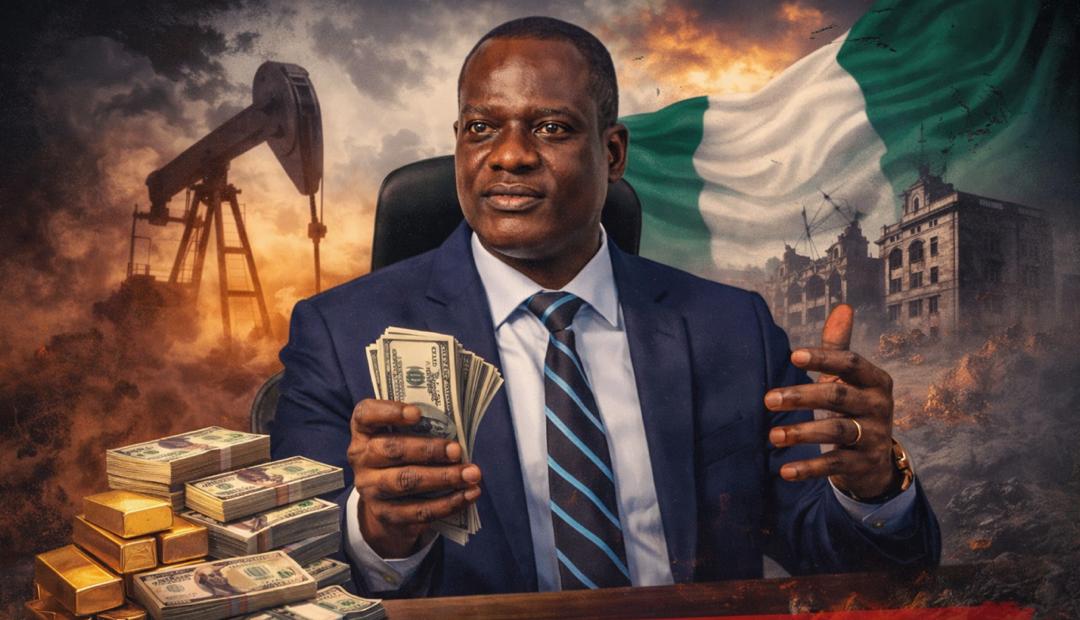
At the centre of this evolving fiscal agenda is Taiwo Oyedele, a tax policy expert who recently moved from serving as chairman of the Presidential Committee on Fiscal Policy and Tax Reforms to his new role as Minister of State for Finance. His rise within the administration has been swift, and his influence over Nigeria’s emerging tax framework is widely acknowledged.
Supporters within government describe Oyedele as a technocrat tasked with modernizing Nigeria’s fragile revenue system. However, critics view his appointment with skepticism, arguing that the aggressive fiscal reforms being introduced risk placing additional burdens on a population already grappling with economic hardship.
Nigeria’s fiscal challenges are not new. For decades, the country relied heavily on crude oil revenues while maintaining one of the lowest tax-to-GDP ratios globally. Governments historically collected limited revenue from taxation, resorting instead to borrowing while postponing difficult structural reforms.
Yet the strategy currently being pursued raises fresh concerns.
Since assuming office, President Tinubu’s administration has introduced a series of sweeping economic policies. The removal of fuel subsidies led to an immediate surge in petrol prices, while the liberalization of the foreign exchange market triggered a sharp depreciation of the naira. The ripple effects have been felt across the economy, driving up the cost of transportation, food, and essential services.
For many households, these policy shifts have translated into a severe cost-of-living crisis.
Now, the government is entering the next phase of its economic reform agenda: a comprehensive overhaul of Nigeria’s tax system. The new framework championed by Oyedele aims to centralize tax administration, strengthen compliance mechanisms, and significantly expand the national tax net.
In principle, the objective is to build a modern and efficient revenue system capable of funding national development.
In practice, however, many Nigerians fear the reforms may deepen the financial strain already facing households and small businesses. Concerns have also been raised about transparency within the legislative process, following reports that a member of the House of Representatives identified discrepancies between the version of the tax legislation passed by lawmakers and the document eventually signed into law.
Economic reforms rarely operate in isolation; they unfold within complex social realities. In advanced economies, tax expansion typically occurs alongside robust social safety nets, reliable public services, and clear accountability in governance.
Nigeria offers no such assurances.
Public infrastructure remains inadequate, electricity supply is inconsistent, healthcare systems are overstretched, and recurring corruption scandals continue to erode public confidence in government institutions. For many citizens, the question therefore becomes unavoidable: why should taxpayers contribute more when public service delivery remains weak?
This tension represents a central contradiction in the administration’s fiscal strategy.
By prioritizing revenue expansion without first restoring trust in governance, the government risks creating the perception that its reforms are focused more on filling state coffers than improving citizens’ welfare. Without visible investments in job creation, social protection, and support for micro, small and medium-scale enterprises (MSMEs), increased taxation may be viewed not as reform, but as economic pressure on an already struggling population.
The implications are not purely economic, they are also political.
History demonstrates that taxation without visible public benefits can erode government legitimacy. When citizens believe they are paying more while receiving less in return, frustration grows, resentment deepens, and political stability can become fragile. For a country still consolidating its democratic institutions, such tensions carry significant risks.
None of this suggests that tax reform is unnecessary. Nigeria must eventually broaden its revenue base if it hopes to finance critical investments in infrastructure, education, healthcare, and long-term development for its rapidly expanding population.
However, reforms must be balanced, humane, and carefully sequenced.
What Nigerians urgently need today are policies that stimulate economic recovery, generate employment, and expand opportunities. Any fiscal reform perceived as “taxing poverty” risks undermining the very economic stability it seeks to achieve.
As Taiwo Oyedele settles into his new ministerial role, he faces the difficult task of proving that the reforms under his watch will strengthen Nigeria’s fiscal future without worsening the hardship faced by ordinary citizens.
If successful, he may ultimately be remembered as the technocrat who helped stabilize Nigeria’s public finance system. If not, history may judge his legacy far more critically, as the architect of a taxation regime introduced at a time when millions of Nigerians were already struggling to stay afloat.
For many Nigerians, the coming years will determine which version of that legacy prevails.