

By Ify .O. Akuba
The multi-billion naira Liquefied Petroleum Gas (LPG) plant in Kwale presents a paradox—both a blessing and a curse to residents of Ogbeani community.
Owned by SEEPCO Ltd, the facility reportedly produces about 700,000 cubic metric tonnes of gas daily.
Since it began operations in 2020, the plant has improved access to cooking gas for residents and provided supply opportunities for distributors serving nearby towns and cities.
However, despite their proximity to the plant, residents of Ogbeani and Kwale purchase gas at the same rate as those in distant cities, paying as much as ₦1,200 per kilogram.
This is largely due to local marketers who, despite incurring lower transportation costs, maintain uniform pricing with counterparts in cities like Benin and Warri—placing an additional economic burden on the host community.
Beyond pricing concerns, employment practices at the facility have also raised issues. Many indigenes are reportedly engaged as contract staff with limited benefits beyond their salaries. In cases of workplace accidents or health emergencies, casual workers are often left without adequate compensation or support, due to the absence of formal employment documentation.
Investigations further reveal that incidents of workers collapsing on duty are sometimes addressed only with basic first aid, with no long-term medical follow-up or accountability from the company.
The socio-economic impact on the community is equally troubling. With farmlands converted into drilling sites, many youths have been displaced from agriculture—their traditional means of livelihood.
This has contributed to rising unemployment and periodic protests over marginalization, which are often temporarily quelled with stipends rather than sustainable solutions.
While the presence of the LPG plant ensures physical access to cooking gas, it has also introduced serious health and environmental challenges.
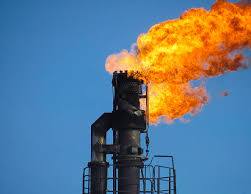
Continuous daily gas flaring releases pollutants into the atmosphere, significantly degrading air quality. Residents are increasingly exposed to health risks including cancer, skin conditions, eye and ear problems, and reduced life expectancy.
Environmental degradation is also evident.
The intense heat and chemical emissions from gas flaring have rendered surrounding soil acidic and less productive, leading to declining yields in staple crops such as yam and cassava. Additionally, local water sources have been contaminated with oily residues, making them unsafe for drinking and fishing.
Experts warn that the long-term consequences of sustained exposure to these pollutants may be even more severe for the community.
To mitigate these impacts, stakeholders have called on the Federal Government, through its regulatory agencies, to compel SEEPCO Ltd to uphold its corporate social responsibility by improving environmental practices, ensuring fair employment conditions, and prioritizing the welfare of the host community.