

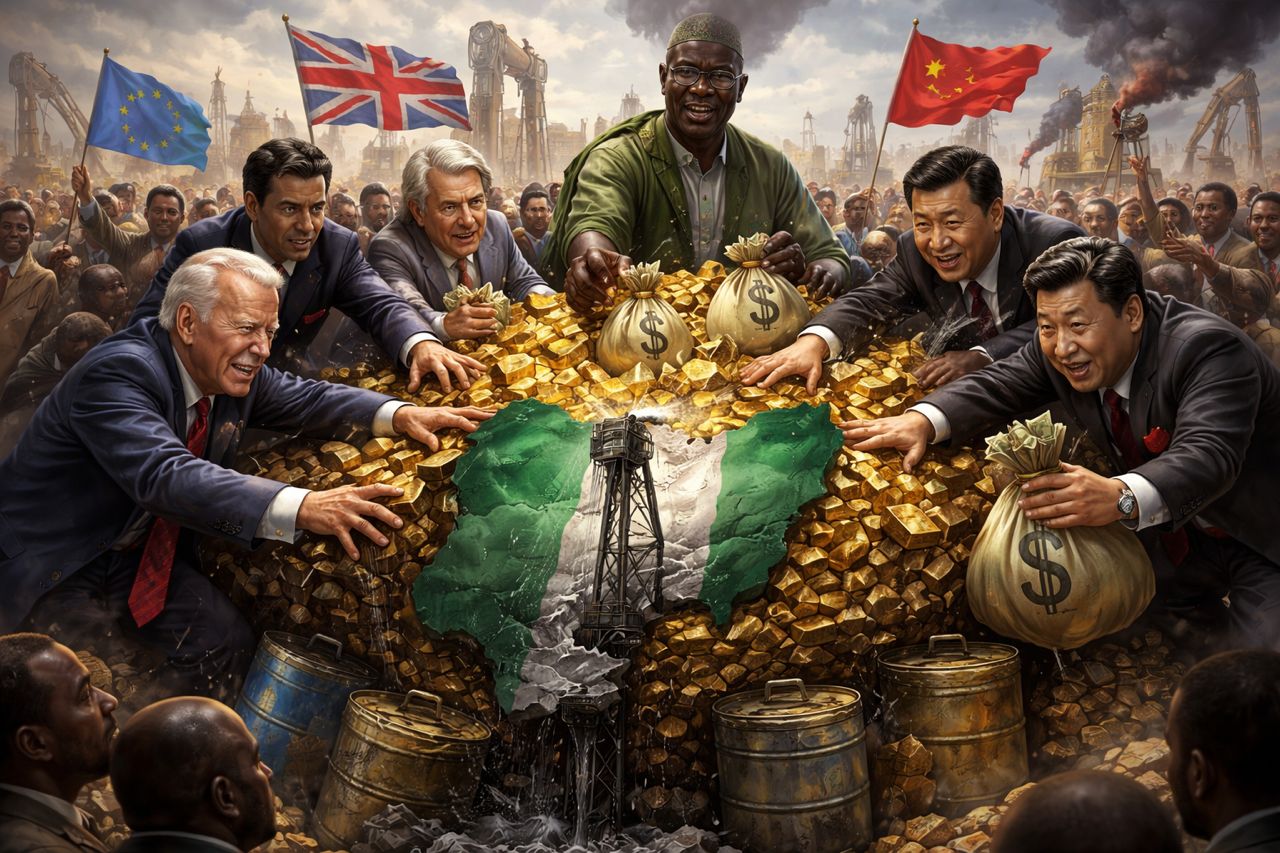
Nigeria is once again at the center of global strategic calculations. From its colonial beginnings to its present status as Africa’s largest economy and most populous black nation, the country has consistently attracted external interest. Today, that attention is sharpening into a quiet but consequential contest between Western Europe and China, each seeking influence over Africa’s most pivotal state.
This is not a new story. Nigeria’s modern economic structure was shaped under British colonial rule, formalized in 1914 by Frederick Lugard. The colonial economy was designed for extraction, linking Nigeria’s agricultural and later mineral resources directly to European industries. Decades after independence in 1960, that relationship has evolved, but not disappeared.
Oil changed everything. Since the discovery of crude in commercial quantities in the 1950s, Nigeria has remained a critical energy supplier. For Western Europe, especially in the aftermath of the Russia-Ukraine War, Nigeria represents an alternative source of energy amid shifting geopolitical realities. The European Union has increasingly turned its gaze toward Africa, seeking reliable partners to stabilize its energy needs.
China, however, is not standing on the sidelines. Its interest in Nigeria is expansive and deliberate. Beyond oil, Beijing sees Nigeria as a gateway to Africa’s future a vast market, a logistics hub, and a strategic partner. Through the Belt and Road Initiative, China has entrenched itself in Nigeria’s infrastructure space, financing railways, roads, and power projects that are visible symbols of its growing footprint.
But this is not merely about infrastructure or energy. It is about influence.
Nigeria’s population, now exceeding 200 million and projected to rise significantly, makes it one of the most attractive consumer markets globally. For Western Europe, it is a destination for goods, services, and investment. For China, it is both a market and a manufacturing extension, a place where trade dominance can be consolidated.
Geography further amplifies Nigeria’s importance. Positioned along the Gulf of Guinea, it sits on critical maritime routes that serve global commerce. Its leadership role within the Economic Community of West African States also makes it a diplomatic anchor in West Africa. Whoever gains influence in Nigeria gains leverage across the region.
Yet, the growing interest comes with risks. Nigeria’s rising debt profile has opened new channels of external pressure. Chinese loans, while instrumental in funding infrastructure, raise questions about long-term sustainability. On the other hand, Western-backed institutions like the International Monetary Fund and the World Bank continue to shape fiscal policy through reform conditions that often carry social and political consequences.
Caught between these competing forces, Nigeria must tread carefully.
The real challenge is not the attention itself, but how it is managed. External interest, if strategically harnessed, can accelerate development, modernize infrastructure, and expand economic opportunities. If mismanaged, it can deepen dependency, erode sovereignty, and mortgage the future.
Nigeria cannot afford to be a passive arena for global competition. It must act as a deliberate player setting clear national priorities, enforcing transparency in agreements, and ensuring that partnerships translate into tangible benefits for its citizens.
The emerging rivalry between Western Europe and China is not inherently detrimental. But without a coherent national strategy, Nigeria risks becoming a prize to be won rather than a power to be reckoned with.
The choice, ultimately, lies in Abuja not in Beijing or Brussels