

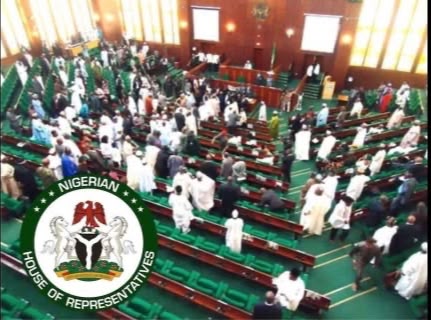
Abuja, June 12, 2026 — The House of Representatives has passed a landmark constitutional amendment bill seeking to establish state police across Nigeria, marking a significant step in the country’s efforts to address worsening insecurity and decentralize law enforcement.
The bill, which received overwhelming support during plenary presided over by Speaker of the House, Rt. Hon. Tajudeen Abbas, proposes a major alteration to the 1999 Constitution to allow each of Nigeria’s 36 states to establish and operate its own police force alongside the existing Nigeria Police Force.
The constitutional amendment is widely regarded as one of the most consequential security reforms since Nigeria’s return to democratic rule in 1999. Supporters argue that the current centralized policing structure has struggled to cope with the diverse security challenges facing different regions of the country, including insurgency in the North-East, banditry and kidnappings in the North-West, separatist violence in the South-East, communal conflicts, and oil-related crimes in the Niger Delta.
Presenting the report of the Constitution Review Committee, Deputy Speaker Benjamin Kalu urged lawmakers to support the proposal, describing it as a necessary response to the nation’s evolving security challenges. The House subsequently adopted the report and approved multiple constitutional amendment clauses relating to the creation of state police.
According to details of the bill, Section 214 of the Constitution would be amended to formally recognize both Federal Police and State Police formations. The National Assembly would retain authority to establish minimum operational standards, organizational structures, and regulatory frameworks governing state police services throughout the federation.
One of the key safeguards contained in the proposal limits federal intervention in state policing matters. Under the framework, the Federal Police may intervene only in situations involving a complete breakdown of law and order, upon the request of a state governor, or when a state police service becomes unable to function effectively due to financial, administrative, or operational difficulties.
Advocates of the reform maintain that governors, who are constitutionally designated as chief security officers of their states, have long complained about lacking direct operational control over police personnel deployed within their jurisdictions. They argue that state police would improve intelligence gathering, enhance response times to emergencies, and provide law enforcement officers with better knowledge of local communities and terrain.
The push for state police has gained momentum amid growing concerns over insecurity across the country. Recent incidents of mass abductions, attacks by armed groups, and persistent criminal activities have intensified calls for a more localized security architecture. President Bola Tinubu has expressed support for the reform, while consultations involving the Presidency, the National Assembly, security agencies, and state governments have accelerated efforts to amend the Constitution.
Despite widespread support, the proposal has also attracted criticism. Opponents warn that state governors could potentially misuse state-controlled police forces against political opponents or minority groups. Concerns have also been raised about funding, training standards, coordination between federal and state forces, and the capacity of economically weaker states to sustain effective police institutions.
For the amendment to become law, it must still secure approval by at least two-thirds of the Senate and be ratified by no fewer than 24 of the 36 State Houses of Assembly before it can be transmitted to President Tinubu for assent.
If ultimately enacted, the legislation will fundamentally reshape Nigeria’s security architecture and represent the most significant decentralization of policing powers since independence, potentially altering the relationship between federal and state authorities in the maintenance of law and order.