

Paul Okojie
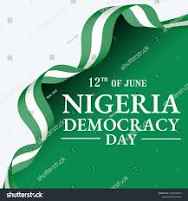
Today, as Nigeria marks another June 12, political leaders will once again deliver litanies of speeches celebrating democracy. There will be official ceremonies, public holidays, and lofty declarations about democratic governance.
Yet beneath the fanfare lies an uncomfortable truth: June 12 is not merely a celebration of democracy. It is, first and foremost, a memorial to a man whose life was consumed by the struggle to ensure that the will of the Nigerian people prevailed over military dictatorship which had span for almost 34years after independence.
That man was Chief Moshood Kashimawo Olawale (MKO) Abiola.
For this reason, June 12 should not simply be celebrated as Democracy Day. It should be formally observed as MKO Abiola Memorial Day, ensuring that future generations understand the enormous sacrifice upon which Nigeria’s democratic journey was built.
History records that on June 12, 1993, Nigerians participated in what remains widely acknowledged as the freest and fairest election in the country’s history. In a nation often divided by ethnicity, religion, and regional loyalties, Nigerians rose above their differences and voted overwhelmingly for MKO Abiola. The election demonstrated the possibility of a united Nigeria and reflected the genuine aspirations of the people.
But the military regime of General Ibrahim Babangida abruptly annulled the election, plunging the nation into political uncertainty and outrage.
The annulment was more than a political decision; it was an assault on the sovereignty of the Nigerian people. It sent a dangerous message that votes did not matter and that the military could overturn the people’s mandate at will.
Many politicians would have retreated in the face of such overwhelming state power. Abiola chose a different path.
Refusing to abandon the mandate freely given to him by Nigerians, he became the symbol of a nationwide struggle against military dictatorship. While others compromised, negotiated, or fled into exile, Abiola stood firm.
He insisted that the June 12 mandate belonged not to him alone but to millions of Nigerians whose voices had been silenced.
His resistance came at a tremendous personal cost.
Following General Sani Abacha’s seizure of power in November 1993, Nigeria descended into one of trying time in its post-independence history. Political opponents were hunted down, journalists were imprisoned, newspapers were shut down, and civil liberties were routinely violated. Yet Abiola remained steadfast.
On June 11, 1994, nearly one year after the election, he publicly declared himself the rightful president of Nigeria at Epetedo in Lagos. It was a courageous act that challenged the authority of a military government feared throughout the country.
The response was swift.
He was arrested and charged with treason.
For approximately four years, Abiola remained in detention, much of it under harsh conditions
. He was separated from his family, denied his freedom, and subjected to immense psychological pressure. Throughout his incarceration, he was repeatedly urged to renounce his claim to the presidency. He refused.
The struggle became even more tragic with the assassination of his wife, Kudirat Abiola, in 1996. She had become one of the most visible voices demanding her husband’s release and the restoration of the June 12 mandate. Her murder shocked the nation and underscored the brutality of the military era.
Yet even in the face of personal loss, Abiola did not surrender.
Then came the events of 1998. General Abacha died suddenly on June 8, raising hopes that Abiola would soon regain his freedom.
Those hopes were shattered barely a month later when Abiola himself died in detention on July 7, 1998, before he could enjoy the liberty for which he had sacrificed so much.
His death transformed him from a political leader into a national martyr.
The irony remains profound. MKO Abiola won Nigeria’s most credible election, yet he never occupied the office to which he was elected. He never took the oath of office. He never governed the nation. He never exercised presidential powers. Instead, he paid with his freedom, his family, and ultimately his life.
It is therefore misleading to speak of June 12 solely as Democracy Day. Nigeria Democracy Day should be May 29 when Nigerians celebrated to handover of power back to Civilian rule.
Democracy did not sit in prison for four years. MKO Abiola did.
Democracy did not lose a wife to political violence. MKO Abiola did.
Democracy did not die in detention. MKO Abiola did.
The freedoms Nigerians enjoy today were purchased with sacrifices made by Abiola and countless other pro-democracy activists who challenged military dictatorship. To celebrate democracy while gradually forgetting the sacrifices that secured it would be a grave disservice to history.
Former President Muhammadu Buhari took an important step in 2018 by recognising June 12 as Democracy Day and posthumously honouring Abiola with Nigeria’s highest national award. Yet more remains to be done.
Nigeria needs a day of national remembrance dedicated specifically to MKO Abiola and all those who suffered and died defending democratic principles.
Such a day would not diminish democracy; rather, it would deepen the nation’s appreciation of it. It would remind every generation that democracy is sustained not by speeches and ceremonies but by courage, sacrifice, and unwavering commitment to justice
.
As the nation reflects on June 12, it must remember that behind the date stands a man whose name has become inseparable from Nigeria’s democratic struggle. The day is significant because of what happened after the election as much as because of the election itself.
The most fitting tribute Nigeria can pay is to ensure that June 12 is remembered not merely as Democracy Day but as MKO Abiola Memorial Day, a solemn reminder that freedom has a price and that some patriots paid it in full.
That is the true meaning of June 12.